


Ad sales is about much more than selling space to advertisers. Media sellers are selling an audience, and proving that audience’s value to a buyer demands a data-driven approach.
Media sellers have access to valuable audience data from their owned and operated channels, as well as from social video platforms like YouTube, TikTok, Instagram, Facebook, and others. But sellers need to put that audience data into context to show prospective buyers why they should advertise with them over competitors.
Keep reading to learn how Tubular’s social video data helps sellers turn vanity metrics into proof of value, create leverage in negotiations, and accelerate deals.
First-party and third-party audience data: why your pitch needs both
Publishers have a distinct advantage in ad sales: access to reliable first-party data collected directly from their own sites and applications. This data provides publishers with a direct view of activity on their own properties. Platforms like Chartbeat collect that data in real time to provide insights into audience behavior and editorial performance.
Owned and operated audience data is a strong starting point, but pairing it with broader audience insights gives a sales pitch more to stand on. This is where third-party data enrichment can make a difference.
Third-party data, or information collected independently across outside channels (like social video platforms), enriches first-party data by providing greater context about an audience’s behaviors, preferences, and affinities. This broader context can help sellers demonstrate not just the size of a publication’s footprint, but the quality of its audience.
Building the pitch using Tubular social video data
Gathering the right audience data is only half the job. The other half is turning that data into a compelling pitch that helps win and retain premium sponsors and advertisers. A seller’s pitch needs to show a channel’s reach and influence with the exact audience an advertiser cares about. Just as important, that pitch needs to differentiate the seller from every other potential advertising venue competing for the same budget.
That’s where Tubular’s global scale comes in. As the world’s largest source of social video data, Tubular gives ad sales teams visibility across the entire social video landscape, helping them show, with specifics, why their audience is the stronger bet.
So how can sellers put Tubular to work in an actual pitch?
How Tubular shows up in the pitch to advertisers
Tubular helps ad sales teams turn audience data into specific proof points that can strengthen advertiser conversations and create leverage in negotiations. Here’s how:
Demographic segmentation
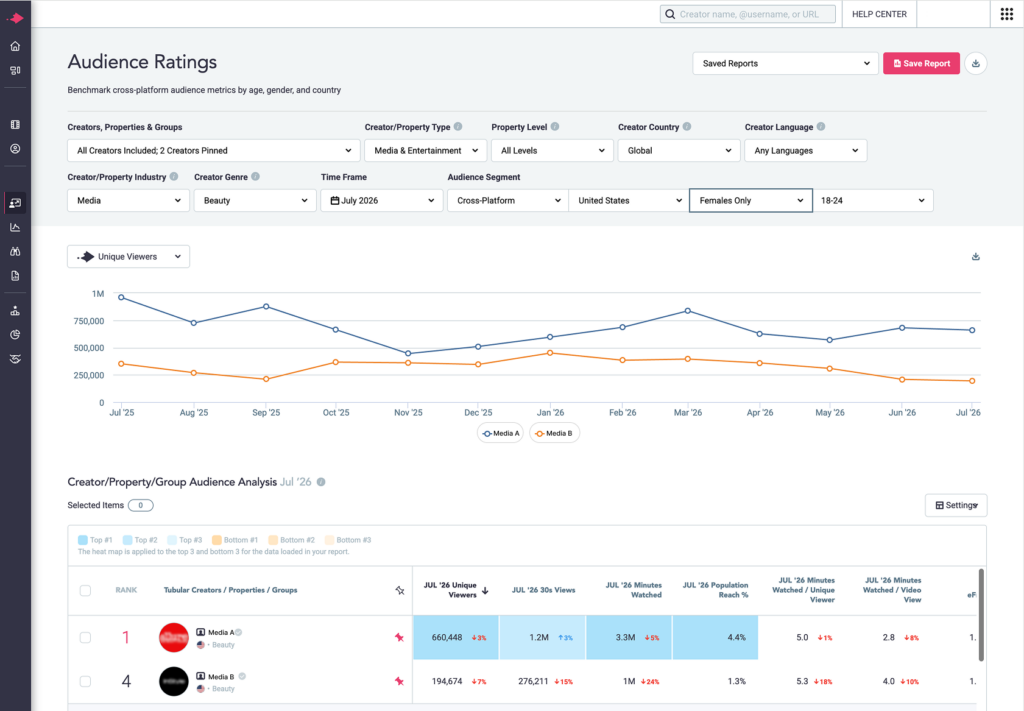
Different advertisers care about different audience segments. Tubular lets sellers segment by location, age, and gender to show how their channel performs with a brand’s target demographic.
Example: Media Company A can win advertising and sponsor dollars over Media Company B for beauty brands targeting women ages 18-24 by highlighting their audience overlap. Even if the content of the two companies look comparable (without access to Tubular analytics), sellers can point to segment-level performance to show an advantage where it matters most to the buyer.
Audience overlap data
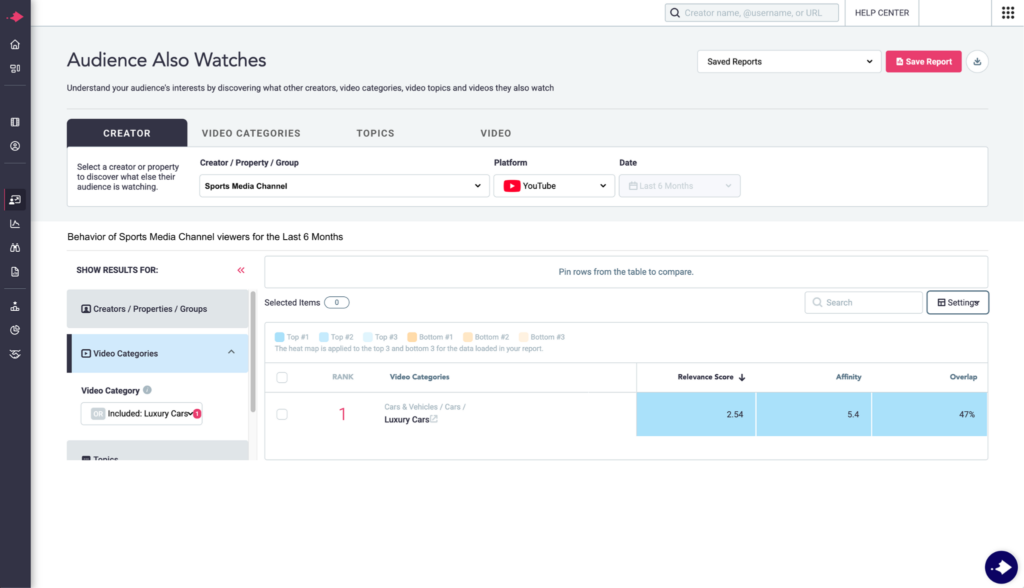
Beyond standard location, age, and gender breakdowns, ad sales teams can also use audience affinities across content categories to find overlapping interests and diversify audience targeting. By identifying overlaps in audience interests and preferences beyond an advertiser’s core content, sellers can uncover additional ways to demonstrate the relevance of their audience.
Example: A sports media company can show that its audience has a 47% viewer overlap with luxury car content on YouTube. That gives the seller a concrete way to prove the sports channel’s audience already has an affinity for luxury cars.
Content performance insights
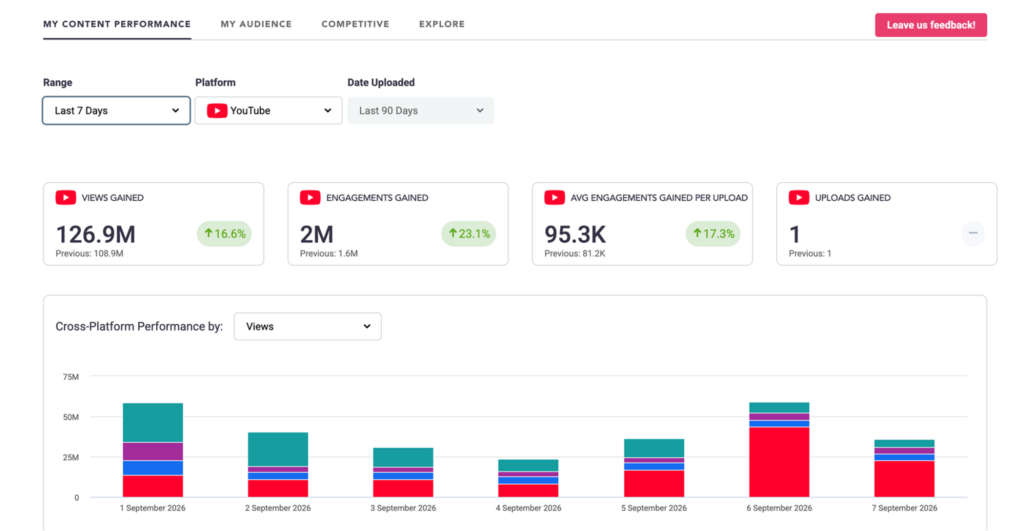
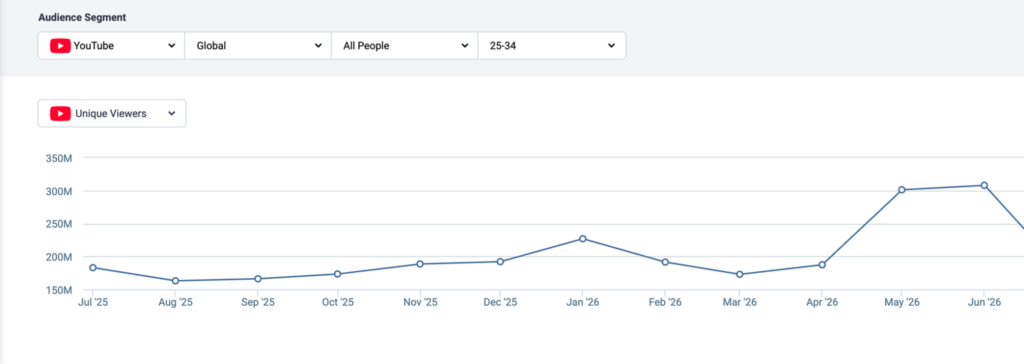
Sellers can use content performance insights to show platform gains and growth trends, then layer in audience demographics. This might mean pulling the demographic data that matters most to a given advertiser, such as age or gender, and using it to show growth in the segment that the advertiser cares about.
Example: A seller can show 55% year-over-year growth among viewers 25–34 on YouTube. That’s more compelling than a generic growth number because it shows momentum in the exact audience segment an advertiser is trying to reach.
Real-world example: turning Tubular data into a winning pitch
Here’s how this plays out, using an anonymized example from a real pitch:
A global news publisher needs support pitching a branded content deal to a travel booking platform looking to grow unaided brand awareness among UK millennials aged 25–34.
Using Tubular, the ad sales team pulled two proof points:
- Competitive performance data showing how its content performed on views, comments, and shares against competing digital publications.
- Audience overlap data showing that viewers who watched its content also heavily consumed adjacent content niches, including aesthetic café reviews and minimalist packing tutorials.
Those proof points become the foundation of the pitch: “Our content already outperforms competing publications on views, comments, and shares, proving that our audience is engaged. But our audience overlap data can give your campaign an edge if you advertise with us.
We’re seeing a notable crossover between travel intent and our ‘foodie’ subculture, specifically around minimalist packing tutorials and aesthetic café content. Rather than running generic travel ads to our audience, you can build creative tailored to those specific niches to reach an audience that’s already primed to pay attention.”
Key takeaways: what it takes to prove audience value
The common thread here is proof: a pitch built on specific, verifiable data points beats one built on broad reach numbers and assumptions. Here’s what that means for media sellers:
- You’re selling an audience, not ad space: Proving that target audience’s value to a buyer requires a data-driven approach.
- Specific, timely proof beats general claims: A trend spike tied to a real moment, or granular metrics comparing audience watch time to the competition, does more for a pitch than a broad statement about audience quality.
- The right segment matters more than the audience as a whole: Demographic-level data lets a seller show performance with the exact group a brand is targeting, while content performance insights show how much growth potential that group has.
- Audience overlap data gives a distinct edge: Knowing what else your audience cares about — not just what they’re already watching — can turn a generic pitch into a specific, harder-to-replicate creative angle.
FAQ
Social video data gives ad sales teams the third-party data validated proof points they need to move buyers from consideration to commitment. Rather than defending audience data claims with first-party data alone, media sellers can lead with independent, cross-platform evidence of audience size, quality, and engagement. Leading with this approach results in a pitch deck that’s harder to push back on and a CPM or rate card that’s easier to justify.
First-party data is collected directly from a publisher’s own site or application and is specific to owned and operated channels. Third-party data is collected independently across outside channels like YouTube, Instagram, and Facebook, adding cross-platform context about an audience’s behaviors, preferences, and affinities. Together, they give media sellers a complete picture of audience value that neither source can provide alone.
Social video data can surface trend spikes tied to specific campaigns or events, head-to-head performance comparisons against competing publishers, demographic-level breakdowns of how a channel performs with an advertiser’s exact target audience, and audience affinity data showing what else that audience watches.